The rapid expansion of low Earth orbit (LEO) satellite constellations – the so-called “megaconstellations” – is revolutionizing global connectivity, enabling high-speed broadband access including remote and underserved regions and across industries. STMicroelectronics (ST) has established itself as a key enabler at the heart of this transformative space-tech ecosystem, leveraging its differentiated technologies and integrated device manufacturer (IDM) model to deliver solutions across the entire LEO value chain.
 Remi El-Ouazzane, President, Microcontrollers, Digital ICs, and RF Products Group at STMicroelectronics, shares ST’s strategic position in the LEO market, its technological contributions to user terminals and satellite systems, collaborative efforts with leading LEO operators, and its forward-looking vision to support the next generation of space applications.
1/ What is ST’s position and history in the LEO market?
The space-tech market is divided into three main segments: semiconductor solutions for geostationary satellites, low Earth orbit constellations, and ground infrastructure systems including user terminals. STMicroelectronics offers differentiated technologies across this entire space-tech value chain.
Since 1977, STMicroelectronics has supported numerous European space initiatives, holding European Space Agency (ESA) qualifications since its inception, and later adding the American QML-V certification.
As key technology supplier, ST delivers advanced space-grade technologies in RF, analog, power and 28nm FD-SOI for digital applications, enhanced by specialized space hardening expertise. These solutions have contributed to over 100 billion cumulative flying hours without failure.
In addition, ST leverages its automotive industry experience in quality, qualification and high-volume manufacturing – critical for meeting the large-scale production and reliability demands of LEO satellite constellation deployment.
2/ How does ST’s IDM model support the needs of the LEO market?
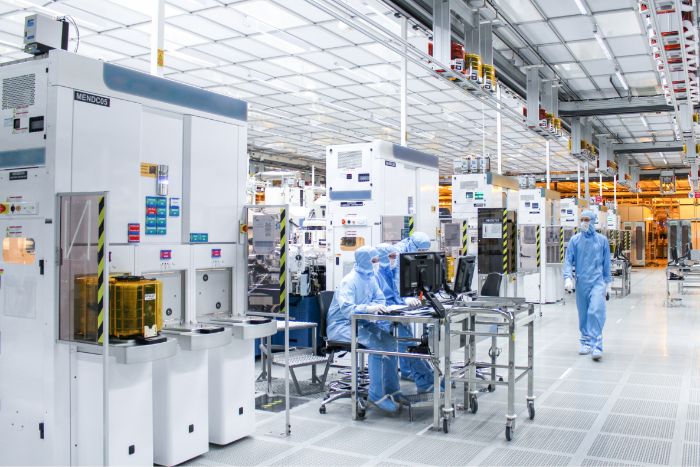
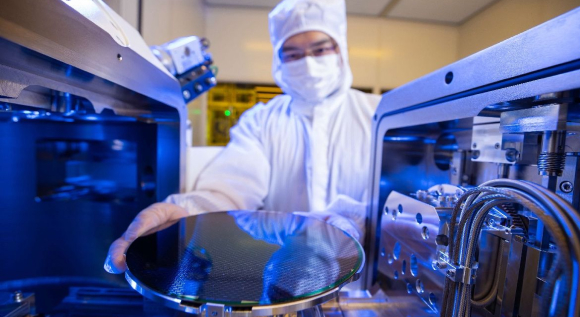
STMicroelectronics’ Integrated Device Manufacturer (IDM) model plays a pivotal role in addressing the complex demands of the LEO market. By owning the entire semiconductor process—from design and development to manufacturing and testing—ST guarantees the quality, reliability, and performance essential for space applications and the high-volume production LEO constellations require.
This end-to-end control of the process also enables close collaboration with customers to address specifics requirements from customers, co-designing and building custom-made ASICS solutions, particularly for user terminals. The terminals are the vital link between end-users and satellites and must reliably deliver high performance connectivity under diverse environmental conditions.
3/ What roles do ST’s differentiated technologies play within the user terminals of LEO constellations?
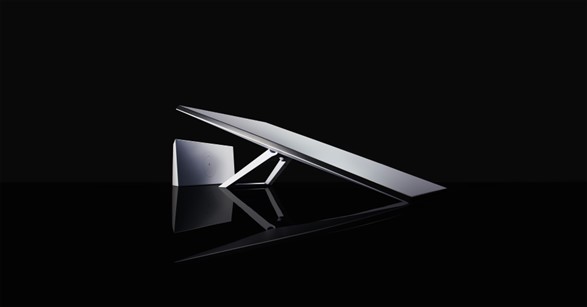
LEO satellite communication demands continuous tracking of fast-moving satellites at low altitudes, requiring user terminals to execute seamless handovers. This capability relies on advanced RF beamforming through Active Phased Antenna Array Systems (APAAS), currently operating in the Ku-band and are evolving towards Ka-band frequencies (approximately 10 to 30 GHz) for the satellite-to-user link.
User terminals must electronically steer antenna beams to maintain alignment with fast-moving LEO satellites – a feat enabled by complex phased-array antenna architectures, replying on specialized RF integrated circuits.
ST’s BiCMOS technology is pivotal in this context. By combining bipolar transistors’ high-frequency performance and linearity with CMOS’ low power consumption and integration capabilities, BiCMOS delivers compact, energy-efficient and highly reliable RF front-end solutions. BiCMOS-based components enhance signal amplification, beamforming, and system control, ensuring robust communication links between fast-moving LEO satellites and user terminals.
STMicroelectronics offers a comprehensive portfolio of advanced technologies essential for user terminals within LEO satellite communication systems. These solutions are engineered to meet the demanding performance, reliability, and efficiency requirements of modern satellite connectivity solutions.
This offering includes:
- Radiation-hardened microcontrollers and processors for reliable onboard computing in harsh space environments..
- Power management ICs optimized for efficient voltage regulation and space-grade power conversion.
- RF and mixed-signal components such as high-performance transceivers, amplifiers, and converters tailored for satellite payloads.
- MEMS sensors delivering precise inertial and environmental data critical for navigation, altitude control, and stabilization.
- Advanced packaging that ensures thermal management, mechanical durability and environmental protection.
- Connectivity interfaces enabling seamless integration with satellite subsystems via standard communication protocols.
4/ What is the nature of ST’s collaboration with LEO operators?
Celebrating a decade of partnership with SpaceX, ST has played a vital role in shaping the LEO connectivity landscape that is transforming global internet access. As a key technology provider for Starlink, ST provides a wide range of radio frequency, power, analog, and digital components essential to Starlink’s in-space infrastructure, ground-based equipment, and user terminals. This collaboration leverages ST’s advanced BiCMOS manufacturing and innovative packaging technologies delivering billions of integrated circuits for LEO communication systems.
Beyond supplying components, this collaboration with SpaceX exemplifies a deep co-design approach developing custom, high-quality, reliable solutions to meet the unique demands of LEO constellations.
Building a global broadband connectivity network is helping to reduce the digital divide, by offering affordable and reliable high-speed broadband internet including remote, rural, and underserved areas, boosting the efficiency and productivity of various industries and advancing global accessibility.
5/ What is ST’s vision for the future of the LEO market?
Overall, we see the LEO satellite market as a rapidly evolving arena where advanced, reliable, and energy-efficient semiconductor technologies are critical for next-generation communications infrastructure. The continued advancement of LEO constellations fuels demand for high-quality, high-volume solutions that deliver high speed, low latency broadband connectivity. This growth drives the need for smaller, more power-efficient user terminals.
Satellite connectivity for example, will be critical for the roll-out of autonomous driving systems and other data-reliant vehicle features. The optimal hybrid architecture for future vehicles seamlessly integrates satellite and terrestrial cellular networks with edge computing to ensure continuous coverage and robust resilience.
ST’s mission is to continue driving innovation and collaboration to support the growing demand for miniaturization, resilience, interoperability, and performance to meet the expanding requirements of the LEO ecosystem.
Learn more about ST x SpaceX collaboration: https://newsroom.st.com/media-center/press-item.html/t4741.html
Language Versions