Q&A with Laurent MALIER, Executive Vice President of STMicroelectronics, Global Technology R&D
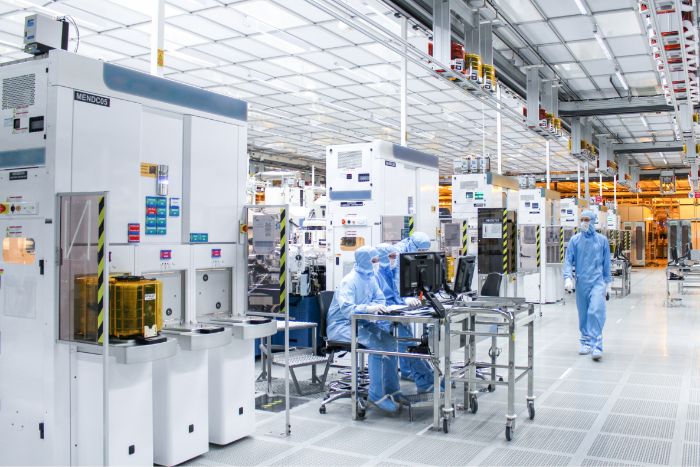
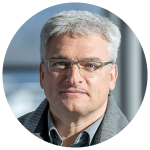 ST is bringing its industrial semiconductor expertise to quantum computing, helping advance silicon-based quantum processors toward commercial viability, with the quality, scalability, and cost discipline required for real-world deployment. With its integrated device manufacturer (IDM) model, 300 mm manufacturing leadership in its Fab in Crolles/France, and fully depleted silicon-on-insulator (FD-SOI) technology platform, ST is well positioned to address one of quantum computing’s central challenges: industrialization.
Why quantum computing now?
Quantum computing is a major frontier in advanced computing, with the potential to address problem classes that are increasingly difficult for classical systems. For ST, the opportunity lies in helping turn that scientific progress into manufacturable, scalable, and reliable technology. Our industrial semiconductor expertise, with our 300 mm manufacturing capabilities in Crolles/France, is highly relevant to this next phase of quantum computing, where success will depend as much on industrialization as on physics.
Where is the field today?
Quantum computing is entering a phase where industrial requirements matter more than ever. The next step is not only to prove that a device works, but also to build systems that are manufacturable, stable, and scalable. From ST’s perspective, the future of quantum will depend on the same disciplines that have shaped advanced semiconductor technologies: process control, integration, quality, and platform maturity. Industrializing those breakthroughs is what will make quantum relevant for real-world compute environments, including future applications powered by high-performance computing.
What qualifies ST for the quantum industry?
ST is an industrial enabler of quantum computing. As a global IDM, we bring deep manufacturing expertise and proven technology development capabilities to a field that must move from laboratory demonstrations to scalable hardware. Our role is to help bridging the gap between quantum potential and industrial deployment, because quantum computing will only become broadly relevant if it can be produced with the consistency, integration, and quality expected from advanced semiconductor technologies.
Why does ST believe silicon / FD-SOI will help industrialize quantum computing?
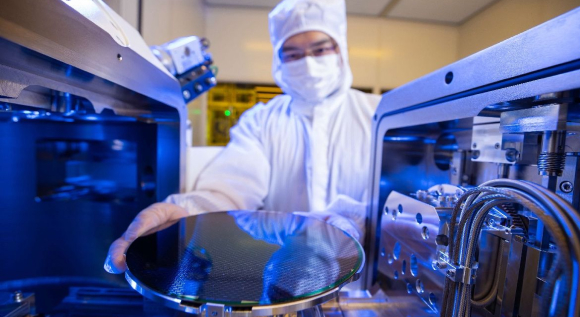
ST believes that silicon-based approaches are especially promising because they build on the semiconductor industry’s strengths and investment for high-volume manufacturing, thus offering a faster path to industrialization. FD-SOI is particularly relevant because it combines strong power-performance, excellent variability control and high integration potential, capabilities that are critical for quantum architectures, where stability, precision, and reproducibility matter. Together, these attributes help move quantum hardware from experimental concepts to manufacturable quantum hardware.
What must happen for quantum to scale?
ST brings the industrial foundations needed to help quantum hardware scale. As a global IDM, we have end-to-end control from technology development to manufacturing execution, and our 300 mm manufacturing leadership provides the process maturity, consistency, and scalability required for industrial deployment. We also bring deep expertise in FD-SOI, a technology platform particularly well suited to applications where power efficiency, variability control, and integration are essential.
How does this fit into the broader compute landscape?
ST sees quantum computing and HPC as complementary parts of a broader advanced computing landscape. HPC will remain essential for large-scale simulation, classical workloads, and data-intensive applications while quantum computing may one day accelerate specific classes of highly complex problems where classical computing becomes less efficient. The future is likely to be heterogeneous, with quantum and classical systems working together and ST’s role is to provide the semiconductor foundations that support this evolution.
Language Versions