As artificial intelligence moves from the cloud to the edge, sensing is becoming central to how machines perceive and act in the real world. STMicroelectronics’ Imaging subgroup (IMG) is at the heart of this shift, with a strategy built around depth sensing, AI-ready vision, and system-level integration.
 In this Q&A, Alexandre BALMEFREZOL, Executive Vice President of ST’s Imaging subgroup, explains how IMG is evolving beyond traditional imaging and why the future of sensors is about perception, not just capturing images.
To start, who is ST’s Imaging subgroup and how is imaging evolving in the AI era?
IMG is a long-established organization inside STMicroelectronics, with more than 25 years of expertise in optical sensing. Our technologies are already deployed at scale, embedded in billions of devices across multiple markets. We started with camera image sensors and expanded step by step. Today, our mission is much broader: we enable what we call “physical AI”: systems that can sense, interpret, and respond to their environment. That means going beyond conventional imaging to combine vision, depth, and contextual sensing into true machine perception. The industry is moving from imaging designed for human interpretation to sensing designed for machine perception. That shift has two major implications. First, sensors must go beyond visible light to capture additional dimensions of information, such as depth or infrared signals. Second, they must be highly efficient, because much of this data will be processed locally, often under tight power and latency constraints.
What does this mean in practice for sensor design, and what is ST’s role in this transformation?
It changes the design priorities. Rather than optimizing only for resolution or image quality, we optimize for system-level performance: power consumption, latency, integration complexity and the ease with which the sensor’s output can be used by AI. Our technologies are therefore designed to provide context, not just pixels. They are conceived as elements of a broader system that includes computing, software and algorithms — all co-designed to enable perception.
Our role is to make this transition possible with integrated sensing systems. We bring together vision, depth and processing in coherent, optimized solutions. That is why we say imaging is no longer just about cameras; it is about converting light into usable data that powers intelligent behavior at the edge. This is what unlocks the next wave of AI applications in real-world environments.
How would you describe IMG’s strategy and positioning today?
The industry is shifting from imaging for people to sensing for machines, and our strategy reflects that evolution. With over 3 billion ToF sensors shipped, ST is moving beyond components to deliver integrated sensing systems that combine depth, vision, and AI-ready processing for real-world applications.
Our core ambition is to transform light into trusted data that AI can consume directly to understand a scene and support decisions. Instead of following the entire imaging market, we concentrate on domains where sensing truly drives system value: depth sensing, AI-driven vision and highly integrated solutions. This focus positions us not as a commodity camera supplier, but as a partner for advanced perception in fast-growing areas such as industrial automation, robotics and edge intelligence.
HOW IS ST DIFFERENTIATED
What makes this position credible in the market and where does ST differentiate?
There are three main pillars: innovation over the long term, industrial scale, and our portfolio structured around two core platforms: FlightSense for depth sensing and BrightSense for AI vision; forming a complete perception stack for edge AI
Over the last decade, we have shipped billions of sensors, notably in Time of Flight (ToF) and global shutter families. That volume confirms our technologies are not only advanced, but also robust and proven in the field. At the same time, because we focus on differentiated sensing, we can sustain strong positions in the segments we target and keep investing in what sets us apart.
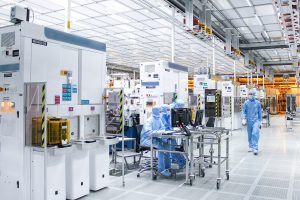
Our differentiation rests on focus and integration in high-value sensing technologies where perception, performance and system-level integration matter most. A crucial asset is our Integrated Device Manufacturer model along with what we describe as a “pixel to system” approach. We master every step, from pixel architecture and process technology to manufacturing, packaging and system integration. That gives us speed in innovation and the ability to deliver complete sensing solutions rather than standalone parts.
How important are your footprint and the IDM model, and what are the practical benefits?
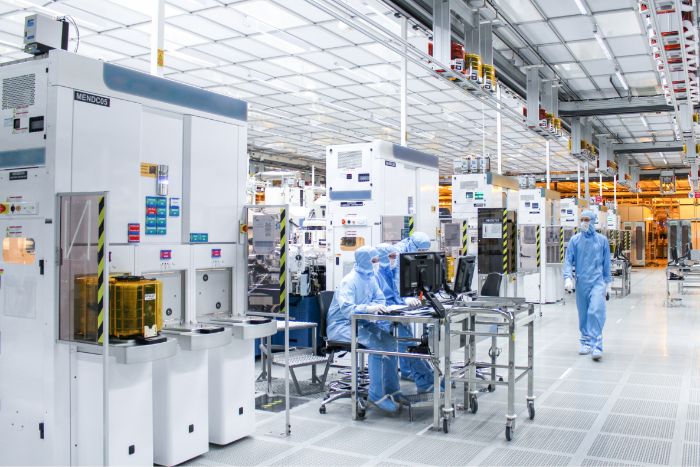
It is central to our value proposition. We control the end-to-end chain thanks to our IDM model: sensor design, process development, front-end manufacturing in Europe and back-end operations in Asia, supported by a global network of partners and customers. This structure lets us industrialize innovations quickly, guarantee quality and reliability at scale, and tailor solutions to demanding markets such as automotive and industrial.
Customers see three main advantages. First, speed: fully owning the stack means we can shorten development and bring new technologies to market faster. Second, differentiation: we can combine sensing, optics, processing and software into pre-integrated subsystems that simplify our customers’ designs. Third, scalability and robustness: our products are designed for high-volume, consistent manufacturing, which is critical for long-life, safety-critical or mission-critical applications.
What role do people play in IMG’s success?
They are the decisive factor. More than 800 specialists work in IMG across 13 countries, and a large share of them are dedicated to R&D. That level of commitment to innovation is essential in a domain where technology is both complex and fast-evolving.
Our teams combine expertise in semiconductors, optics, photonics, signal processing, software, and systems. This breadth allows us to think in terms of complete solutions rather than isolated components, and to co optimize everything from pixels to algorithms.
How does IMG sustain innovation over time?
We rely on both strong internal capabilities and a rich external ecosystem.
Internally, process technology, product design, and system engineering are closely aligned, enabling a fast and efficient path from research ideas to industrial products.
Externally, we work with leading research institutes, as well as universities and industry partners. These collaborations help us explore technologies several years ahead of market demand and secure a continuous innovation pipeline. The balance between internal integration and external partnerships is what allows us to maintain an ambitious roadmap and deliver at scale.
WHICH TECHNOLOGIES ENABLE ST’S STRATEGY
What are the key technologies behind this strategy?
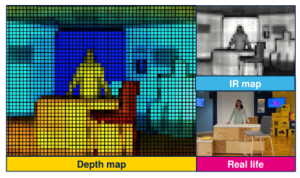
Two pillars stand out: Time of Flight (ToF) depth sensing and AI driven vision technologies such as global shutter and RGB IR imaging. We complement these with advanced capabilities like 3D stacking, metasurface optics, and embedded processing. The goal is for the sensor not only to capture data, but to pre process and structure it so it is directly usable by AI. The real differentiation appears when all these elements are integrated into systems that are smarter, more compact, and more energy efficient.
Time-of-Flight has been around for a while. How mature is this technology today, and what is new with FlightSense?
It is highly mature. We have been developing ToF for more than 10 years and have shipped over 3 billion ToF sensors. What is evolving now is not the core technology itself, but the breadth of its deployment. ToF is moving well beyond smartphones into a wide range of systems that need reliable depth information. It is becoming a mainstream building block for perception.
Our latest flagship is the VL53L9, a fully integrated 3D LiDAR module.
It combines the emitter, receiver, processing, and power management into a compact, calibration free device. It offers more than 2,000 sensing zones, up to 100 frames per second, and a range of up to 9 meters, with a wide field of view.
Beyond the raw specifications, it is designed for easy integration and reliable operation, from bright outdoor light to complete darkness.
On the vision side, what is the role of BrightSense and why is RGB and Near-Infrared combination important?
BrightSense is our family of vision sensors designed specifically for machines.
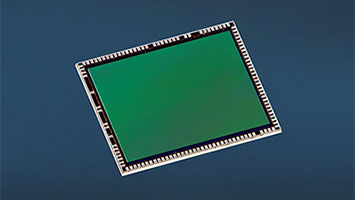
The latest 5 megapixel devices combine innovations such as 3D stacking, 2.25 micron pixels, and a hybrid global/rolling shutter architecture. A single sensor can therefore deliver high image quality and accurate motion capture, functions that used to require different technologies.
Integrating RGB and Near Infrared (NIR) in one sensor is crucial for real world operation.
It allows systems to operate in both day and night conditions without mechanical filters. This simplifies system design, reduces cost and complexity, and improves robustness, especially for applications that must work reliably around the clock.
How are you addressing power consumption, and how do FlightSense and BrightSense work together?
Power is a critical design parameter, particularly for always on and battery powered systems. We have developed ultra low power sensors that operate at around 1–2 milliwatts in auto wake up mode. This allows devices such as wearables and smart home products to perform continuous sensing within very tight energy budgets, making always on AI practical in new form factors.
Flightsense and Brightsense are complementary pillars of perception. FlightSense provides depth and spatial awareness; BrightSense delivers visual and contextual information.
Together, they enable systems that can both map their surroundings and recognize what is happening. In other words, systems that can see, understand, and act. That is the foundation of a real world AI at the edge.
HOW THOSE TECHNOLOGIES TRANSLATE INTO USE CASES AND WHAT DOES THIS MEAN FOR CUSTOMERS AND THE MARKET

How does this translate into real-world applications and what kind of applications are driving demand?
The VL53L9 opens up a wide set of use cases, including robotics, industrial automation, smart buildings, and healthcare. For example, analytics such as people detection or safety monitoring can run directly on a microcontroller. In some scenarios, applications can operate at 30 frames per second while using only about 13% of RAM and 6% of Flash. That level of efficiency is a key enabler for edge AI.
We also see strong traction in smart cities, industrial automation, robotics, and security.
Across these domains, the requirement is the same: devices must understand their environment, not just record it. That is why we emphasize perception rather than traditional imaging.
What is the big takeaway for customers and the market?
We are moving beyond individual sensors to complete perception platforms that integrate sensing, processing, and software. This helps customers build smarter, more efficient products faster, with lower power consumption, reduced system complexity, and higher performance. Sensing is becoming a system level capability and by turning light into trusted data, ST’s Imaging division is helping bring AI out of the cloud and into the physical world.
Language Versions
related-content